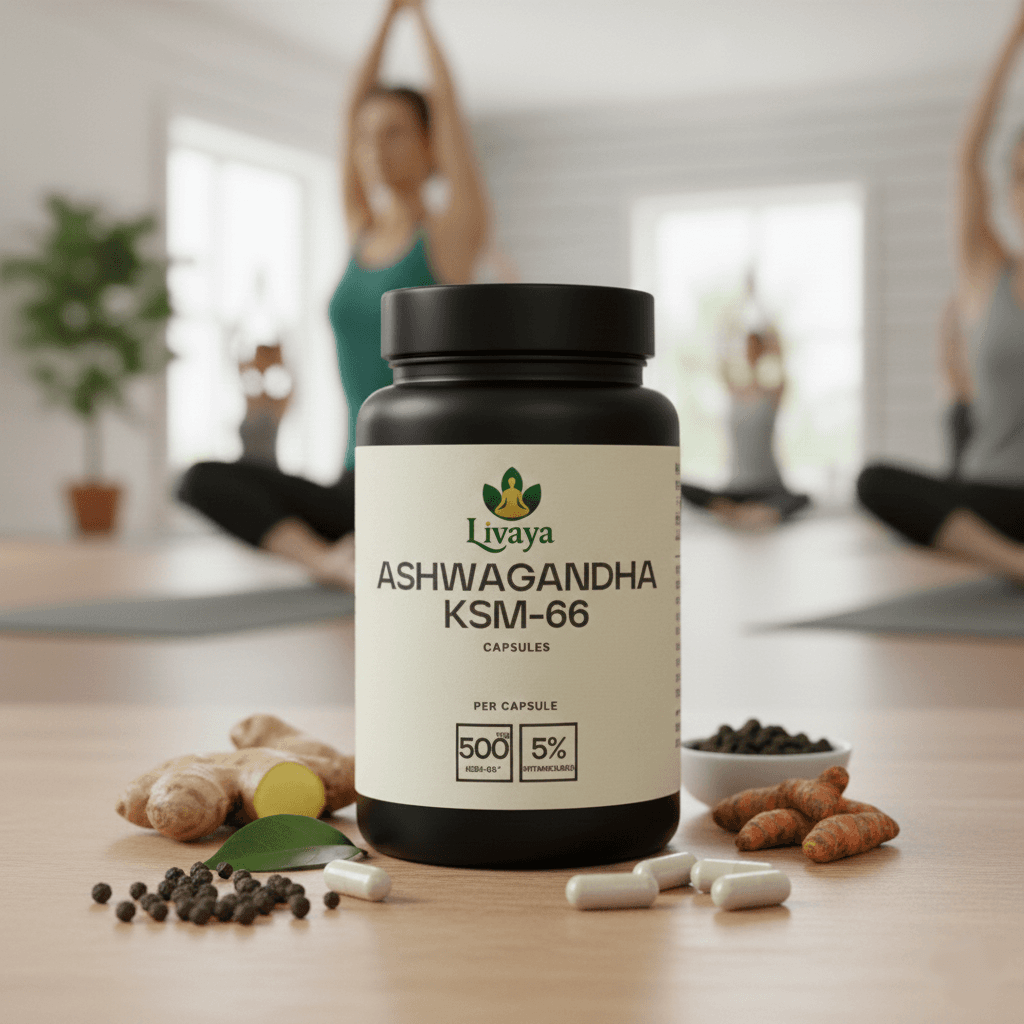
Livaya designs its products around an accurate reading of how Withania somnifera is treated under Japan's Ministry of Health, Labour and Welfare guidance and the Food Sanitation Act. Because customers regularly ask whether ashwagandha is legal in Japan, we cite the public source directly so you can verify it for yourself.
Under Japanese regulation, different parts of the Withania somnifera plant are treated differently. The whole plant (zensō, 全草) — which includes leaves, stems and aerial parts — is listed by the Ministry of Health, Labour and Welfare among ingredients classified as "used exclusively as medicinal substances" (専ら医薬品). It is therefore not permitted as an ingredient in foods or dietary supplements sold in Japan.
The root extract, by contrast, sits outside that medicinal-only classification and is currently treated as eligible for use in foods and dietary supplements. The clinical literature on ashwagandha — both in Japan and overseas — overwhelmingly studies standardized root-only extracts.
Livaya's product is built around KSM-66® ashwagandha, which is a 100% root-only standardized extract by design — no leaves, no whole-plant material. We source directly from Ixoreal Biomed in India, and every batch is independently third-party tested for purity, withanolide content, heavy metals, pesticide residues, and microbial contamination.
Why does "root-only" matter beyond regulatory classification? For someone taking a supplement daily, regulatory clarity is itself a quality signal: it indicates a clearly bounded raw material, a verifiable supply chain, and a product that aligns with how Japan currently classifies ingredients suitable for food. We chose KSM-66 specifically so that customers do not have to guess.
「全草は、国内では『専ら医薬品として使用される成分本質(原材料)』に区分され、食品に使用することは認められていません」
Translation: Within Japan, the whole plant is classified as an "essential ingredient used exclusively as a medicinal substance," and is not permitted for use in foods.
Regulatory classifications and their interpretation can change over time. Please refer to the relevant Japanese authorities for the most current information. This page is not a substitute for legal advice.